
Explore Access and Quality Topics






Latest Resources

NJ SNIP: Supporting Behavioral Health Access Through Trust-based Grantmaking
Amid shifting federal health care funding, grants that enable health care safety net entities to respond to the changing landscape can unlock immense value. This form of grantmaking puts daily program-related decisions in the hands of people doing the work, allowing organizations to develop and sustain staff positions, workflows, and programs that reflect their priorities.

Changing the Vaccine Conversation Before It’s Too Late—What Can Philanthropy Do?
In July 2026, the United States reached a grim milestone when the number of confirmed cases of measles exceeded the total for all of 2025. On August 10, 2026, the White House issued an executive order directing changes to the federal childhood vaccine schedule and categories, and calls for availability of separate measles, mumps, and rubella vaccines. The science has not changed, but the new framework could significantly slow down the delivery of protective immunizations from these serious diseases.
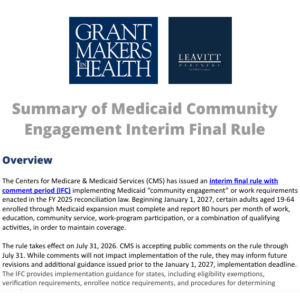
Grantmakers In Health Joins Amicus Brief Challenging Medicaid Work Requirement Rule
Grantmakers In Health (GIH) has joined an amicus curiae brief filed September 10 in Commonwealth of Massachusetts v. Oz, supporting a challenge to a federal rule that the brief argues would strip Medicaid coverage from millions of people with serious health conditions. GIH joined the American Public Health Association, the Jacobs Institute of Women’s Health…

Opioid Use Disorder in Pregnancy: Countering Bias and Promoting Care
Most pregnancy-related deaths in North Carolina are preventable. Yet mental health conditions, including overdose and suicide, remain the leading cause of pregnancy-related death. For health care leaders, that reality demands a closer look at how we identify, treat, and support pregnant and postpartum patients with opioid use disorder.

Preventing Domestic Violence by Reaching People Who Cause Harm
The research involved a landscape scan of Cook County, Illinois’ policies, funding, and services for people who cause harm with a goal of engaging the stakeholders and providers doing this work as well as survivors and those who receive services to identify barriers, challenges, and strengths of domestic violence prevention programs. The research examined Partner Abuse Intervention Programs (PAIP) in particular, a standard intervention for people who cause harm that is overseen by the Illinois Department of Human Services.
Post-Overdose Response Teams: A Community-Based Approach to Public Safety
Recent changes in the federal policy landscape have created new questions for communities working to address substance use disorder (SUD), mental health needs, and housing instability. In this evolving environment, philanthropy, in collaboration with community-based organizations and local governments, has an important role to play in supporting evidence-based responses to overdose and mental health emergencies that improve access to care, strengthen community wellbeing, and uplift public health while avoiding unnecessary criminal legal outcomes.
Publications and Reports
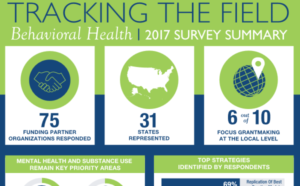
Behavioral Health Funding Infographic and Directory
GIH’s latest survey report highlights current trends and gaps in behavioral health philanthropy. GIH surveyed Funding Partners in March 2017 about investments in mental health, substance use, trauma, and other behavioral health issues.
Domestic Violence: A Public Health Priority
Domestic violence represents a significant public health problem that has received limited attention from the field of health philanthropy. Many health foundations fund domestic violence programs, but relatively few funders have identified domestic violence as a strategic priority.
Time to Step Up: A Call for a National Philanthropic Agenda to Combat Addiction
The country’s opiate epidemic grips national headlines. In 2016, more Americans died of an opiate overdose than from gun violence or traffic fatalities.